
If someone’s tree just came down in a storm, they aren’t scrolling through page three of Google. They’re typing “tree removal near me” and calling whoever shows up first — on the map, in the AI answer box, or at the top of the organic results. That’s the reality of SEO for tree removal companies today: your ranking isn’t just about traffic anymore, it’s about whether AI systems and search engines trust you enough to recommend you by name.
This is where two newer concepts matter alongside traditional SEO: AIO (AI Optimization) and GEO (Generative Engine Optimization). Both are about making sure tools like Google’s AI Overviews, ChatGPT, and Gemini pull your business into their answers — not just Google’s blue links. Combined with solid tree removal marketing, this is how local tree companies win more calls without spending more on ads.
Why Tree Removal SEO Looks Different in 2026
Tree removal is an emergency-driven, hyper-local service. People search with urgency (“emergency tree removal near me“), with price concerns (“tree removal cost,” “stump grinding price”), and with trust signals in mind (“certified arborist,” “isa certified arborist”). That mix of intent — transactional, informational, and commercial — means your SEO strategy has to cover all three, not just chase one keyword.
The keyword data backs this up. High-volume, high-intent terms like “tree removal near me” (33,100 searches), “arborist near me” (22,200 searches), and “stump grinding near me” (12,100 searches) all carry strong local, near-me intent. That tells you exactly where to focus: location pages, Google Business Profile optimization, and content that answers real questions fast.
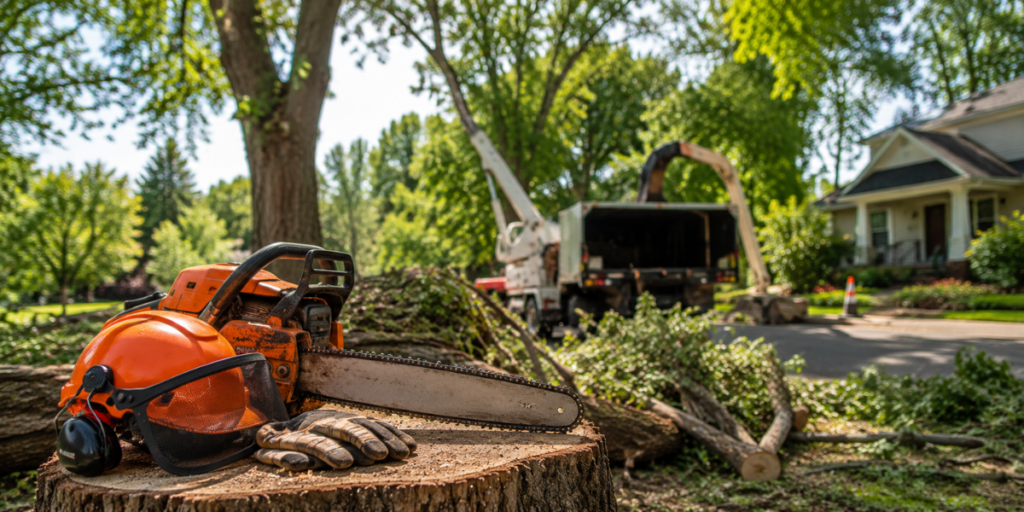
What AIO and GEO Actually Mean for Tree Companies
Traditional SEO optimizes for search engine crawlers and ranking algorithms. AIO and GEO optimize for a different reader: the AI model itself.
AIO (AI Optimization) focuses on structuring your website so AI tools can easily understand, extract, and reuse your content — clear headings, direct answers near the top of the page, and structured data (schema markup) that spells out your services, service areas, and pricing ranges.
GEO (Generative Engine Optimization) goes a step further, optimizing specifically so generative AI tools (AI Overviews, ChatGPT, Perplexity) cite or recommend your business when someone asks a question like “who does emergency tree removal near me” or “how much does stump grinding cost.”
Practically, this means:
- Writing content in a question-and-answer format that mirrors how people actually talk to AI assistants.
- Including specific numbers — average costs, response times, service radius — because AI models favor concrete, citable facts over vague marketing copy.
- Using schema markup (LocalBusiness, Service, FAQ schema) so both search engines and AI crawlers can parse your services accurately.
- Keeping your NAP (Name, Address, Phone) and service details consistent everywhere online, since AI tools cross-reference multiple sources before trusting a business.
Core SEO for Tree Removal Companies
1. Build Dedicated Service Pages, Not Just One “Services” Page
Instead of a single vague services page, create individual pages for each core offering: tree removal, stump grinding, arborist consultations, and emergency tree removal. This lets you target both broad terms (“tree removal service,” 14,800 searches) and specific ones (“tree removal and stump grinding,” “arborist tree care”).
2. Localize Every Page
Searches like “tree removal mesa az,” “arborist phoenix az,” and “stump grinding scottsdale az” show that people search by city, not just service. Build location-specific landing pages for every city or suburb you serve, each with unique content — not copy-pasted text with the city name swapped.
3. Target the Full Funnel
- Transactional: “tree removal near me,” “stump grinding near me,” “arborist near me”
- Commercial: “tree removal company,” “emergency tree removal,” “stump grinding service”
- Informational: “tree removal cost,” “stump grinding cost,” “tree stump removal,” “arborist cost”
Informational content — like a clear breakdown of tree removal costs or the difference between stump grinding and stump removal — builds trust and is exactly the kind of content AI Overviews love to cite.
4. Win the Google Business Profile Game
For local, near-me searches, your Google Business Profile often matters more than your website ranking. Keep it updated with real photos, accurate service areas, prompt review responses, and posts about recent jobs. This directly feeds both traditional local SEO and AI-generated local recommendations.
5. Earn Genuine Reviews and Local Links
Reviews mentioning specific services (“removed a dead oak in Gilbert,” “stump grinding was fast and affordable”) act as trust signals for both Google’s algorithm and AI models scanning for credibility. Pair this with local backlinks — from home service directories, local news mentions, and community organizations.
6. Prioritize Speed and Mobile Experience
Emergency searches (“24 hour tree removal,” “same day tree removal,” “urgent tree removal”) come from people who need to act fast, often on a phone, sometimes mid-storm. A slow site loses these calls before your content even loads.
Tying It Together: Tree Removal Marketing Beyond SEO
SEO gets you found, but tree removal marketing as a whole also includes paid local ads for emergency terms, retargeting for people who visited your cost pages, email or SMS follow-ups after quotes, and seasonal campaigns around storm seasons when searches for “storm damage tree removal” and “fallen tree removal” spike. A strong AIO/GEO foundation makes every one of these channels work harder, because your brand becomes the recognizable, citable name across the board.
If you want a partner to build this out — from AIO-ready service pages to full local SEO campaigns — you can explore more at NearMeAI.
Frequently Asked Questions
1. What is AIO in the context of tree removal SEO? AIO (AI Optimization) means structuring your website’s content, headings, and data so AI tools can easily read, understand, and reuse it — making your business more likely to appear in AI-generated answers about tree removal services.
2. How is GEO different from traditional SEO for tree companies?
Traditional SEO targets search engine rankings, while GEO (Generative Engine Optimization) specifically targets being cited or recommended inside AI-generated answers, such as AI Overviews or chatbot responses, when someone asks about tree removal near them.
3. Why do near-me keywords matter so much for tree removal SEO?
Tree removal is a local, often urgent service, so most searches include location intent — like “tree removal near me” or “arborist near me” — meaning local SEO and Google Business Profile optimization directly influence how many calls you get.
4. Does schema markup really help with AI-generated search results?
Yes. Schema markup (LocalBusiness, Service, and FAQ schema) gives AI crawlers and search engines structured, easily citable facts about your services, pricing, and service areas, increasing the odds of being featured in AI answers.
5. How often should a tree removal company update its SEO content?
Aim to review service and location pages at least quarterly, and update pricing, service area, and review-based content more frequently, since AI tools and search engines favor fresh, accurate, and consistent information over outdated pages.