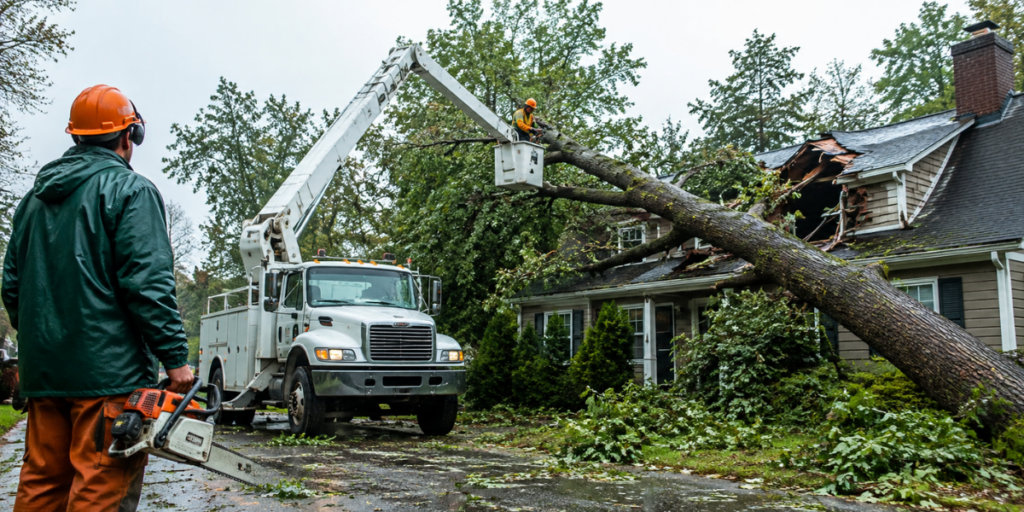
A tree doesn’t fall on someone’s roof at a convenient time. It happens at 11 p.m. during a thunderstorm, or right before a family leaves for work, or the morning after a windstorm when half the neighborhood is calling around in a panic. Whoever shows up first in that Google search wins the job – and usually the customer for life, because a homeowner who’s happy with how you handled their emergency doesn’t go shopping around next time.
That’s the entire logic behind emergency tree removal marketing. It isn’t about being the best tree company in town on paper. It’s about being the company that’s visible, answerable, and trustworthy in the sixty seconds someone spends searching “tree removal near me” with a branch through their window. If your marketing isn’t built for that moment, you’re losing calls to a competitor who simply set up their online presence better.
Below is a practical breakdown of how to actually rank #1 for emergency tree service SEO and turn that ranking into ringing phones.
Why Emergency Tree Searches Are Different From Regular SEO
Most home service SEO strategies are built around patience – nurturing leads, building authority over months, ranking for research-stage keywords like “how much does tree trimming cost.” Emergency tree removal marketing throws that playbook out. Someone searching during a crisis has zero patience. They’re not comparing five quotes. They’re calling the first two or three businesses that look legitimate, answer the phone, and can get a crew out fast.
This changes what you optimize for. Instead of chasing long, informational content, you need:
Speed of contact – a phone number that’s impossible to miss, ideally clickable on mobile. Proof of availability – language and signals that say “we’re open right now,” not “we’re open 9-5.” Local trust signals – reviews, service area pages, and a Google Business Profile that scream reliability. Fast-loading pages – because nobody waits ten seconds for a slow site during a storm.
If your site is built like a brochure instead of a 911 dispatch line, you’re already behind.
Google Business Profile: Your Real Homepage in an Emergency
For local, urgent searches like “emergency tree removal” or “tree removal near me,” Google’s map pack usually outranks organic listings. That means your Google Business Profile often gets more emergency clicks than your actual website.
To strengthen it: keep your business hours updated with an explicit “Open 24 hours” or “Emergency service available” note, use your primary category correctly (Tree Service, not just Landscaper), add photos of actual jobs including storm damage cleanups, and respond to every review – good or bad – because response rate is a trust signal both to Google and to panicked homeowners scrolling through reviews at midnight.
Also make sure your NAP (Name, Address, Phone) is identical across your website, Google profile, Yelp, Angi, and every directory you’re listed on. Inconsistent information quietly kills local rankings, and most tree companies never notice it’s happening.
On-Site SEO: Build Pages That Answer the Panic, Not the Research
Your website needs a dedicated emergency tree removal page – not a paragraph buried inside a general services page. This page should open with your phone number and a line like “Storm damage? Tree down on your property? We respond 24/7” before any other content. Search engines and readers both reward directness here.
From there, weave in your primary keyword – emergency tree removal marketing and related phrases like emergency tree service SEO – naturally throughout headers and body text, not stuffed. Cover what actually matters to someone in crisis: how fast you respond, whether you handle insurance claims, whether you’re licensed and insured, and what areas you cover.
Location matters enormously here. “Tree removal near me” is a hyper-local intent phrase, so build individual pages or clearly marked sections for each city or county you service. A company that only has one generic “Service Areas” page is invisible compared to one with dedicated content for each town, because Google increasingly matches searchers to pages that mention their specific location by name.
Content and Local GEO/AIO Strategy
Search behavior has shifted. People aren’t just typing into Google anymore – they’re asking AI tools and voice assistants questions like “who does emergency tree removal near me” or “what to do if a tree falls on my house.” This is where Generative Engine Optimization (GEO) and AI Overview optimization (AIO) come in.
To be pulled into AI-generated answers, your content needs to be structured clearly, answer direct questions in plain language, and include specific, factual details – response times, service radius, licensing, pricing transparency – rather than vague marketing fluff. AI systems pull from content that reads like a genuine, helpful answer, not a sales pitch. Short, well-labeled FAQ sections, clear headers, and straightforward language all help your content get cited or summarized when someone asks an AI assistant for tree removal help.
Paid Ads and Reviews: The Fast Lane
Organic SEO takes time to build. While it’s growing, Google Local Services Ads and Google Ads for terms like “emergency tree removal” put you at the very top instantly, which matters enormously during storm season when search volume spikes and competitors are bidding aggressively. Budget for these spikes in advance rather than reacting after a storm hits your area.
Reviews deserve just as much attention as ads. A steady stream of recent, detailed reviews mentioning fast response and storm cleanup does more for conversion than almost anything else on this list. After every emergency job, ask the customer for a review while the relief and gratitude are still fresh.
Bringing It Together
Ranking #1 for emergency tree removal marketing isn’t one trick – it’s a combination of a fast, mobile-friendly site, a well-maintained Google Business Profile, hyper-local content, clear answers formatted for both humans and AI tools, and a review pipeline that keeps building trust. Companies like NearMeAI (nearmeai.co) specialize in exactly this kind of local, urgency-driven SEO for service businesses, helping tree companies show up precisely when someone needs them most – not next week, but right now.
Do the unglamorous work of getting these pieces right, and when the next storm rolls through, your phone rings first.
Frequently Asked Questions
How fast should a tree service respond to an emergency call?
Most homeowners expect a callback within minutes and a crew on-site within a few hours, especially if a tree has damaged a structure or blocked a driveway. Companies that advertise and actually deliver rapid response times consistently win more emergency jobs and better reviews.
What’s the difference between emergency tree removal and regular tree removal?
Emergency tree removal deals with immediate hazards – a tree that’s fallen, is leaning dangerously, or is blocking access to a home – and is typically priced and scheduled differently than routine trimming or planned removals, often with 24/7 availability built in.
How do I find a reliable emergency tree removal company near me?
Check that the company shows up in Google’s local map results with recent reviews, confirm they’re licensed and insured, and verify they explicitly advertise 24/7 or after-hours emergency service rather than standard business hours only.
Does homeowners insurance cover emergency tree removal?
It often does if the tree fell due to a storm and caused damage to a covered structure, though coverage varies by policy and insurer. A reputable tree service can usually help document the damage and work with your adjuster, but it’s worth confirming details directly with your insurance provider.
Why does my tree company not show up when I search “tree removal near me”?
This is usually due to an incomplete or inconsistent Google Business Profile, missing local keywords on the website, inconsistent business information across directories, or simply too few recent reviews compared to competitors ranking above you.
Can AI tools like ChatGPT or Google AI Overviews recommend a tree removal company?
Increasingly, yes. These tools tend to surface businesses with clear, well-structured website content that directly answers common questions, along with strong review signals and consistent local information – which is why optimizing for AIO and GEO, not just traditional search rankings, is becoming essential for local service businesses.